Zimbabwe - Free To Be Wild Sanctuary (24-30 November 2025)
Project Overview:
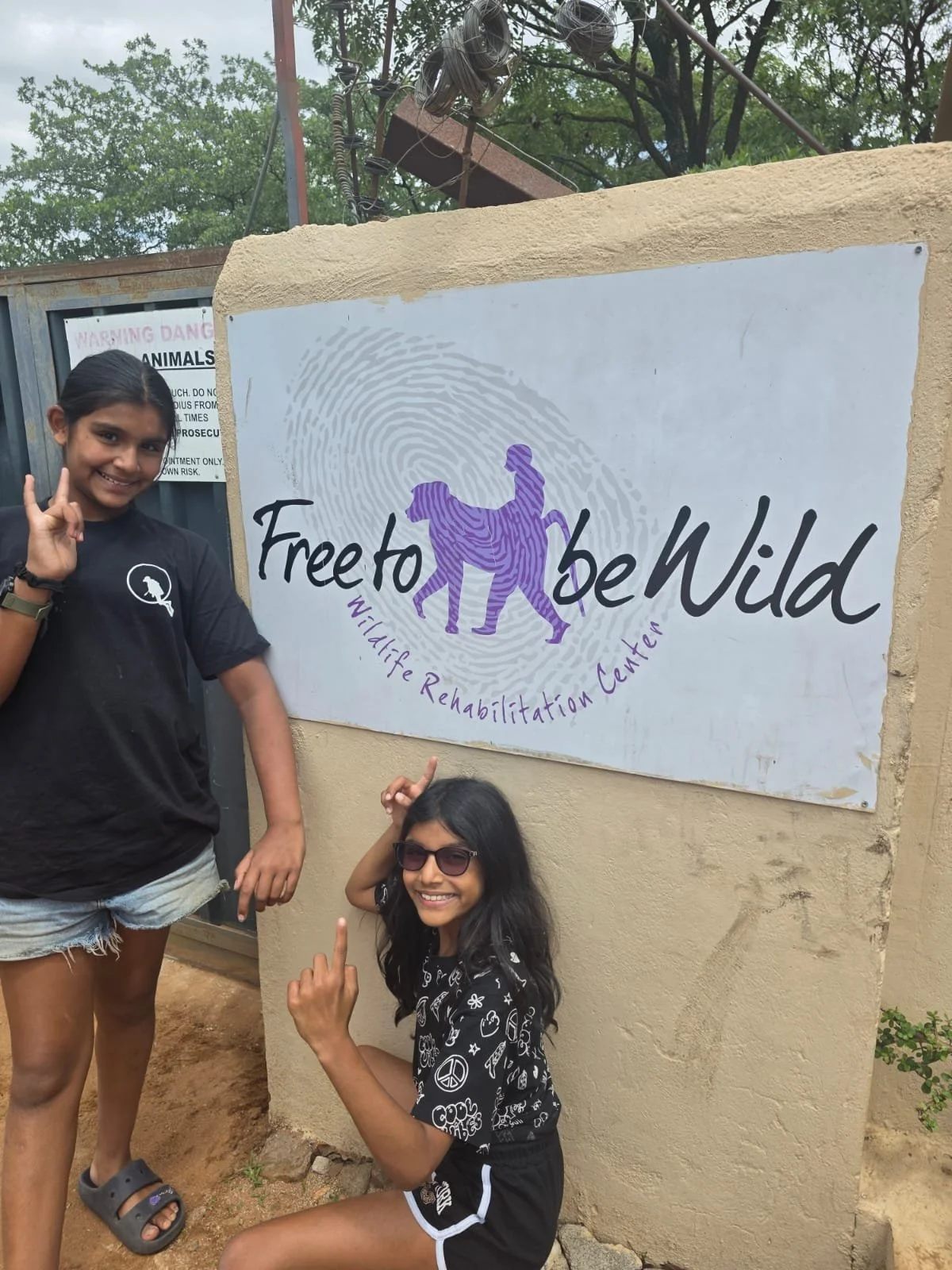
Free To Be Wild Sanctuary (FTBW) is an animal rescue and rehabilitation centre based in Bulawayo. Whilst they accept a wide variety of animals, they specialise in working with primates.
FTBW was founded by Baye Pigors, who remains actively involved today. It is run and managed by a small and close-knit team. They have approximately 4 acres of land that they use to nurture animals back to health and release them back into the wild.
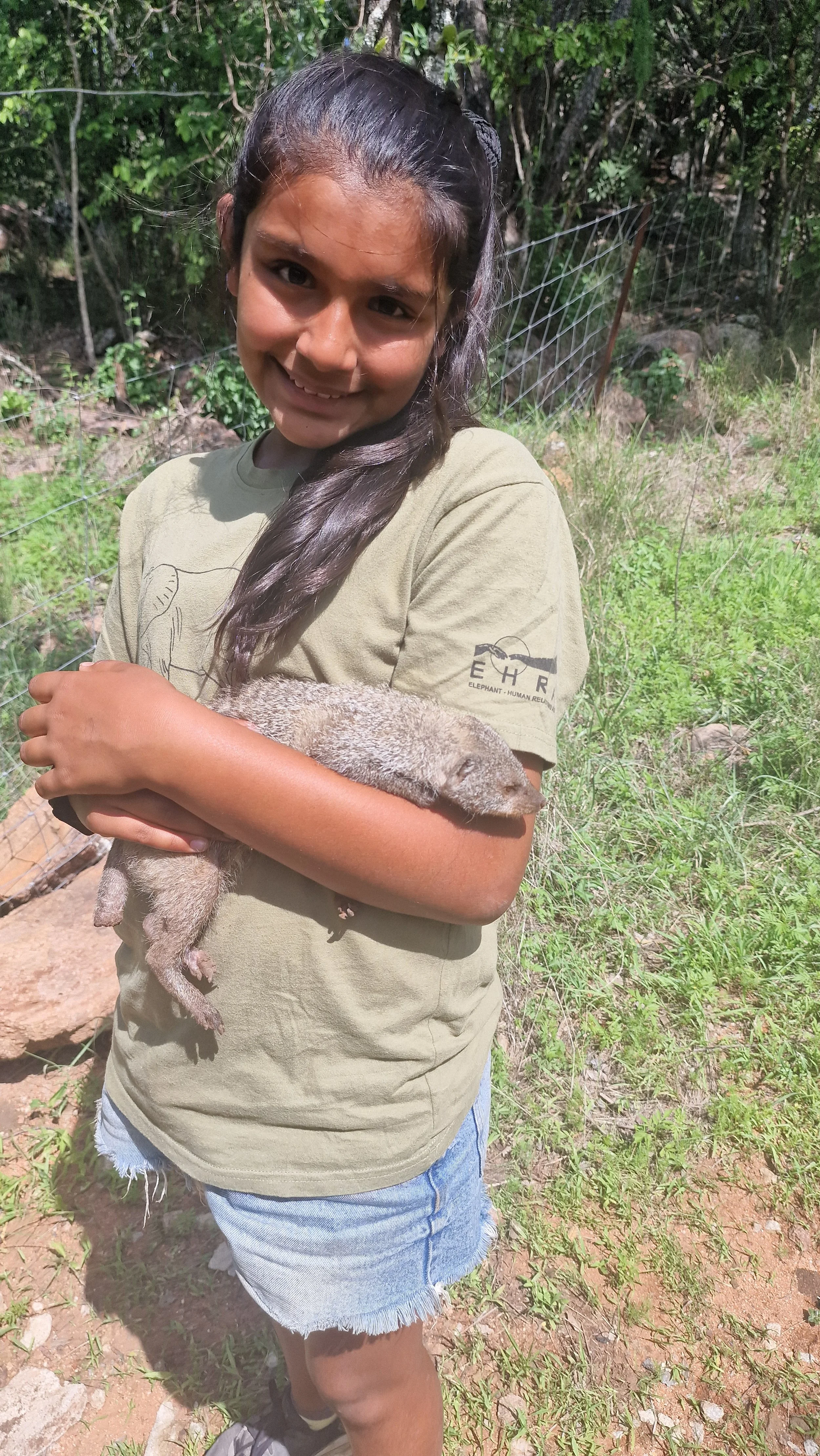
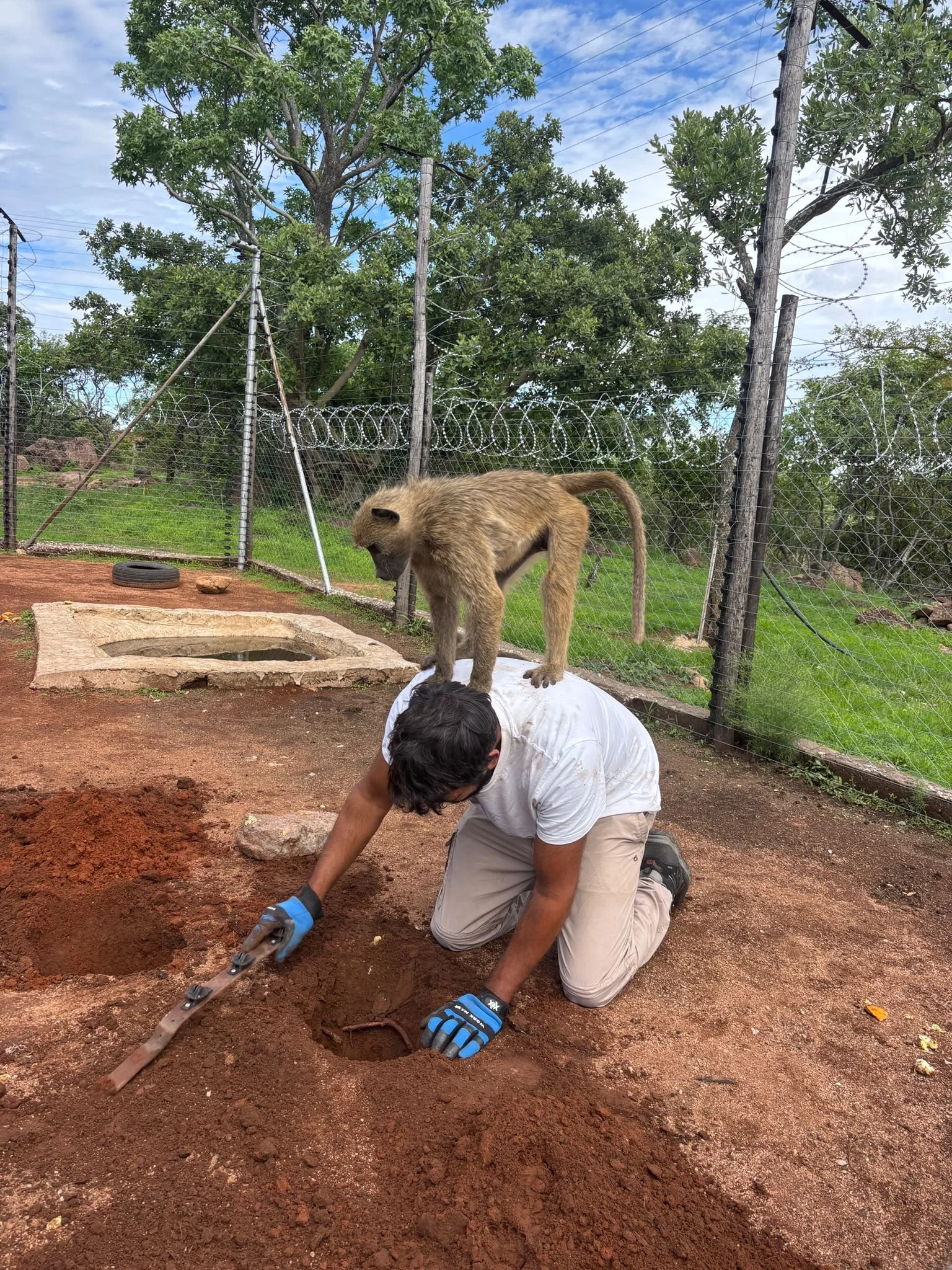
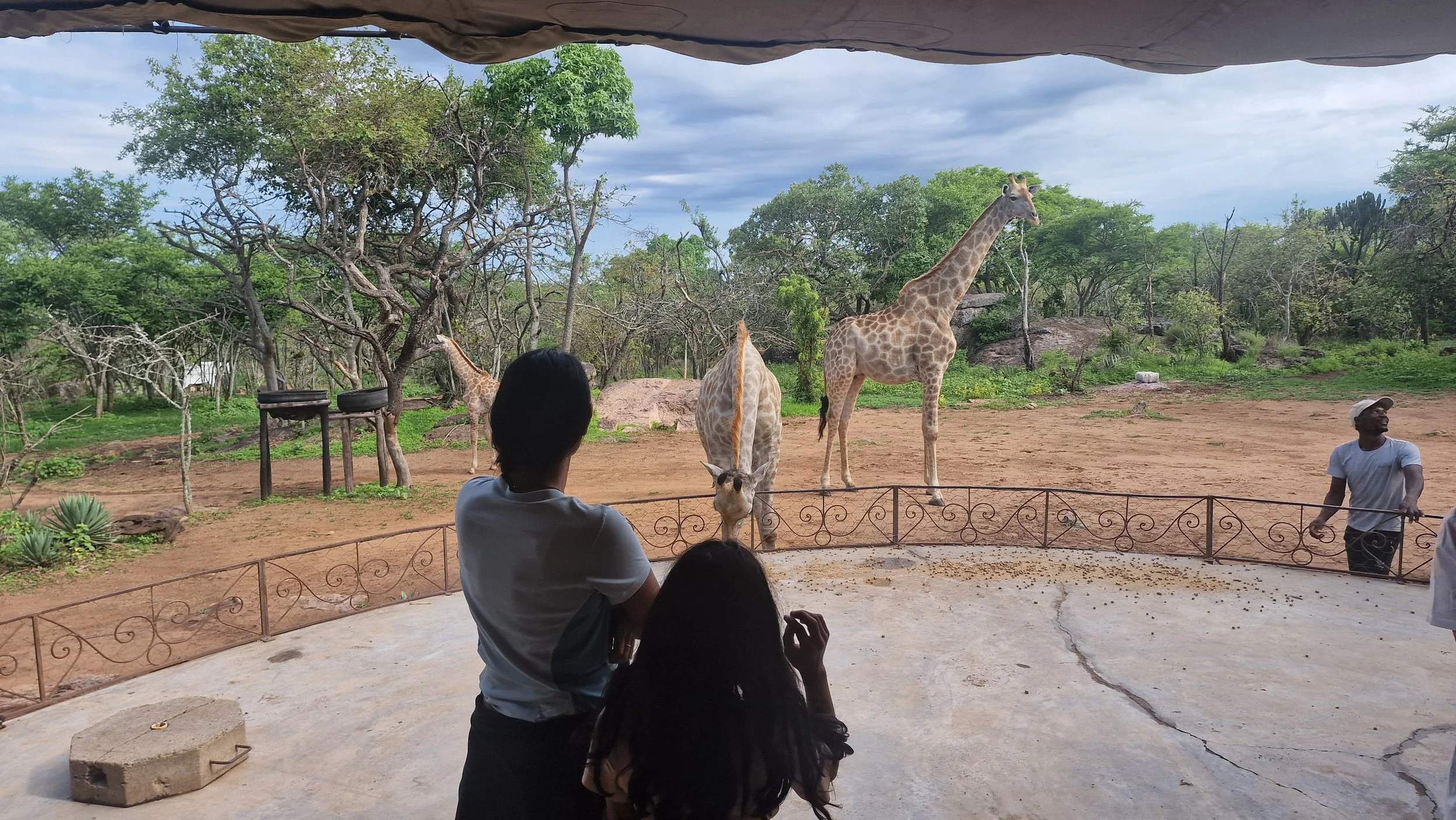
As volunteers we participated in feeding, cleaning, nursing and creating enrichment activities for animals including a troop of young baboons, a baby bush pig, a banded mongoose, a kingfisher, an ostrich and giraffe.
We volunteered here for a week, during which we spent most of our time helping the staff with the young baboons. Shortly after we had left, FTBW successfully released a troop of vervet monkeys back into the wild (who we had met but were being readied for release and so we had minimal contact). It is really exciting to hear about their work, and it felt as though FTBW is very focused on having a consistent stream of releases and rewildings as outcomes for all of the animals in their guardianship.
Key Insights:
As our seventh (and penultimate) project in Africa, it was easier to begin to draw comparisons between the different types of conservation work we had been able to participate in. FTBW was one of the smallest sanctuaries we had been with (in terms of resources and team), and yet perhaps one of the most driven, purposeful and goal-oriented organizations we have encountered too. They proved that they can get consistently great results by being very focused on what really matters, and resourceful when facing constraints.
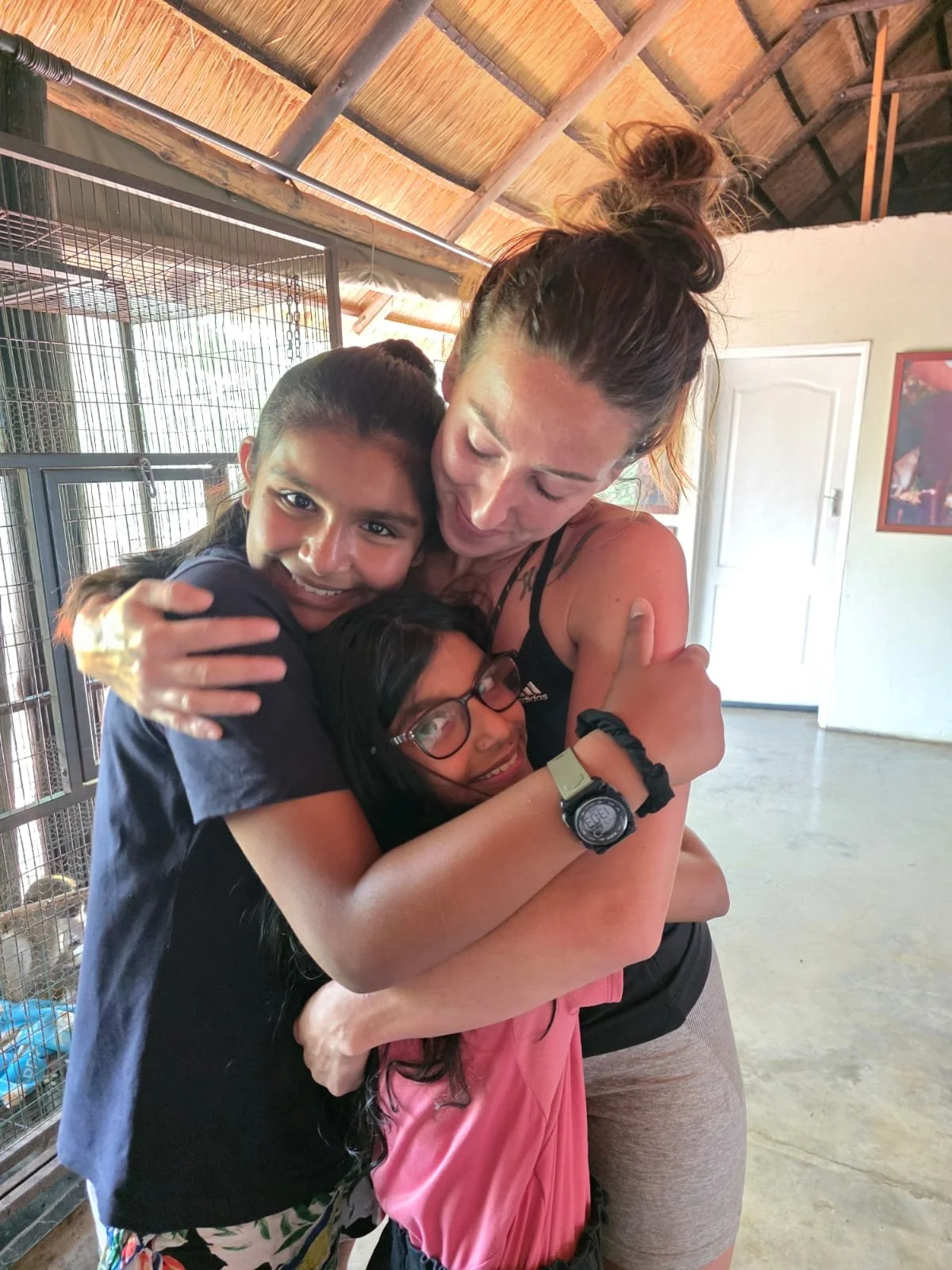
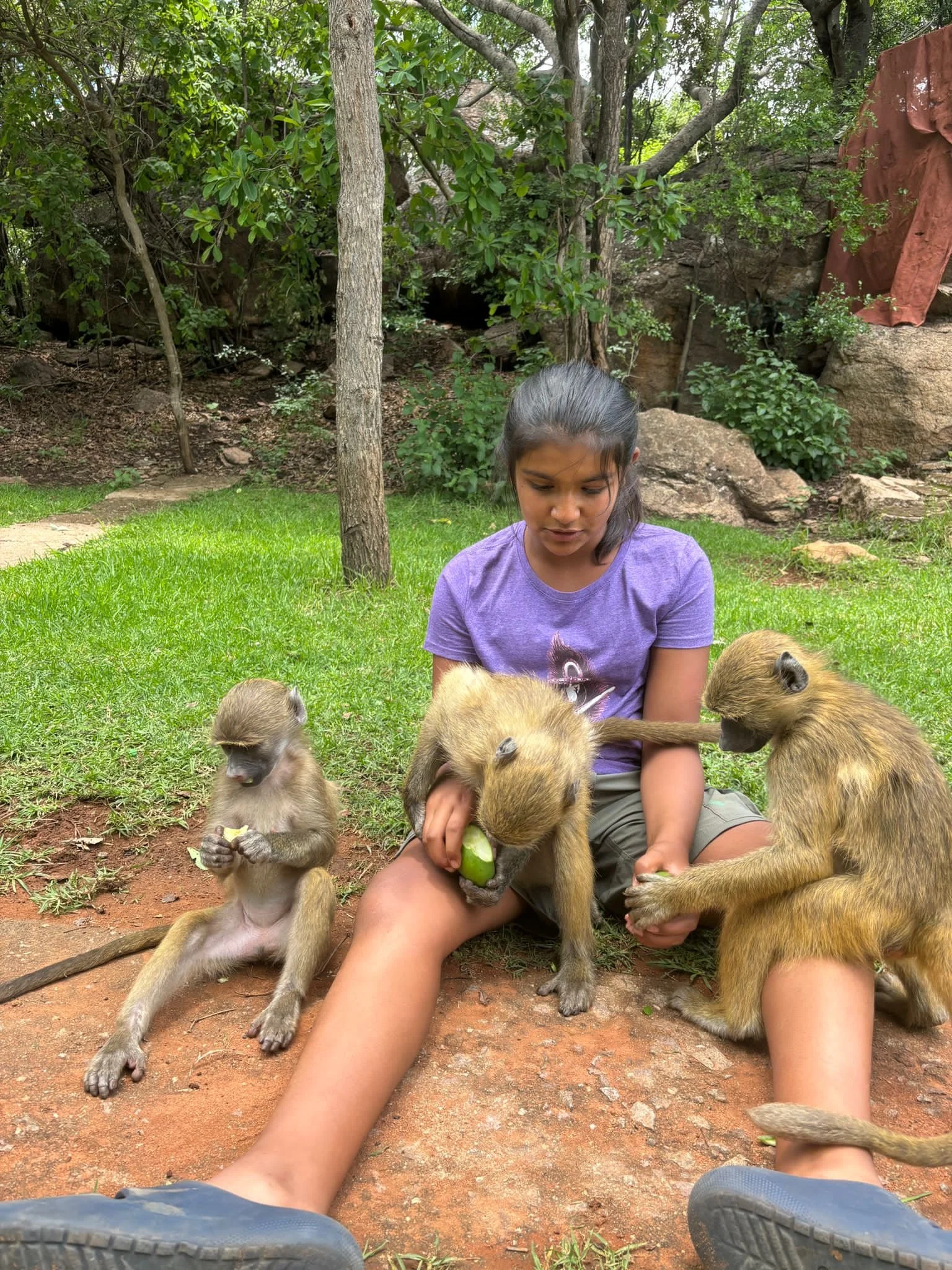
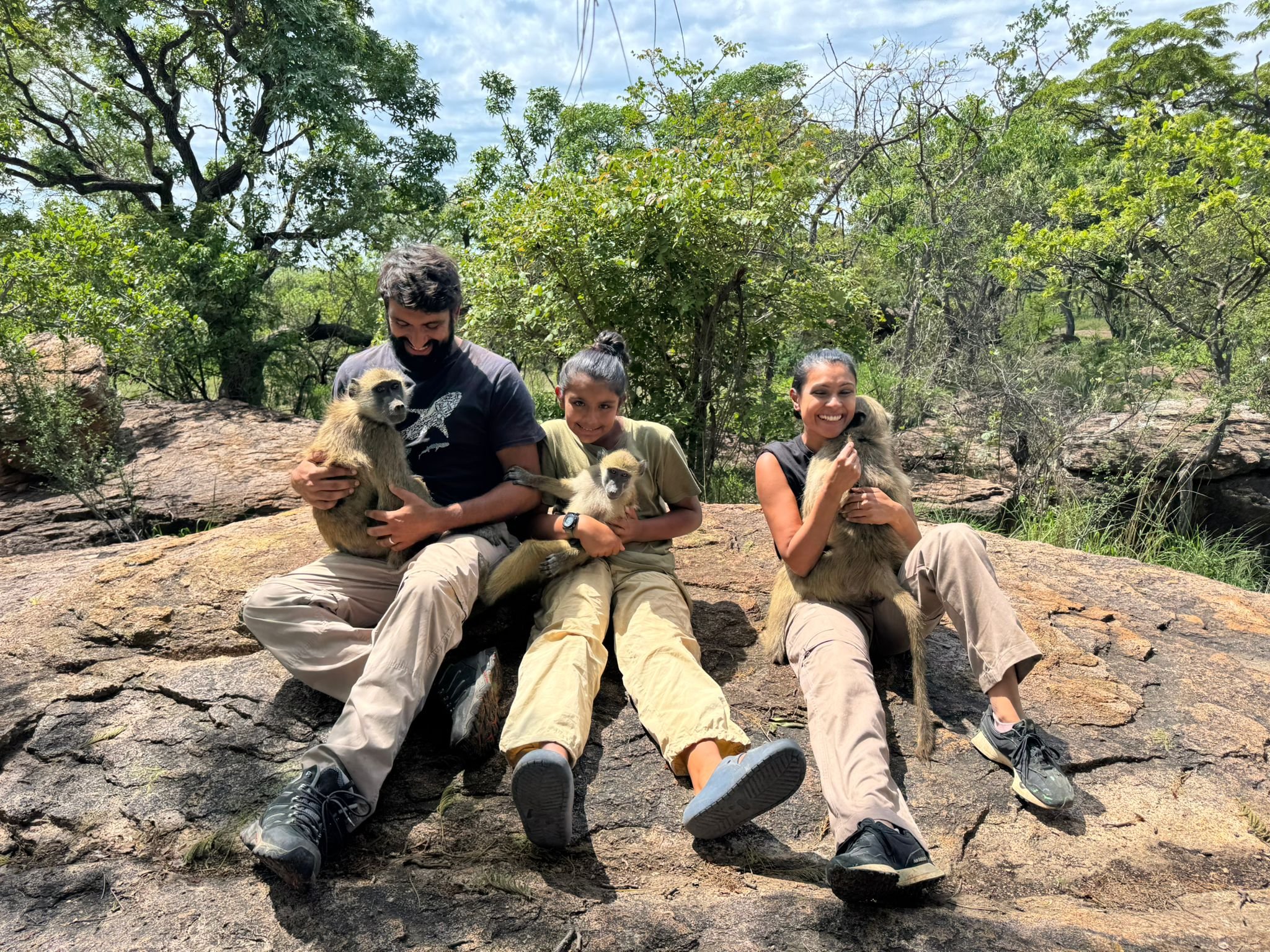
One of the most important breakthroughs for us personally was seeing Anaya overcome her fear of baboons during our time here. In Na’ankuse (our second project in Naimibia) she was attacked and bitten by baby baboons whilst we were stuck in a small cage with them, so she had developed a very strong aversion to being near them (to be honest all of us left our Na’ankuse experience thinking baboons to be annoying, vicious and aggressive!). Here, our main supervisor Noellie took this on, and over a few days and by creating space and thinking about how to give Anaya much more positive interactions with them, Anaya fell in love with a baby baboon called Marigold, and overcame her fear generally. It was amazing to see from multiple angles, and especially the compassion and care that Noellie had to turn this around. (The girls later interviewed Noellie for their podcast).
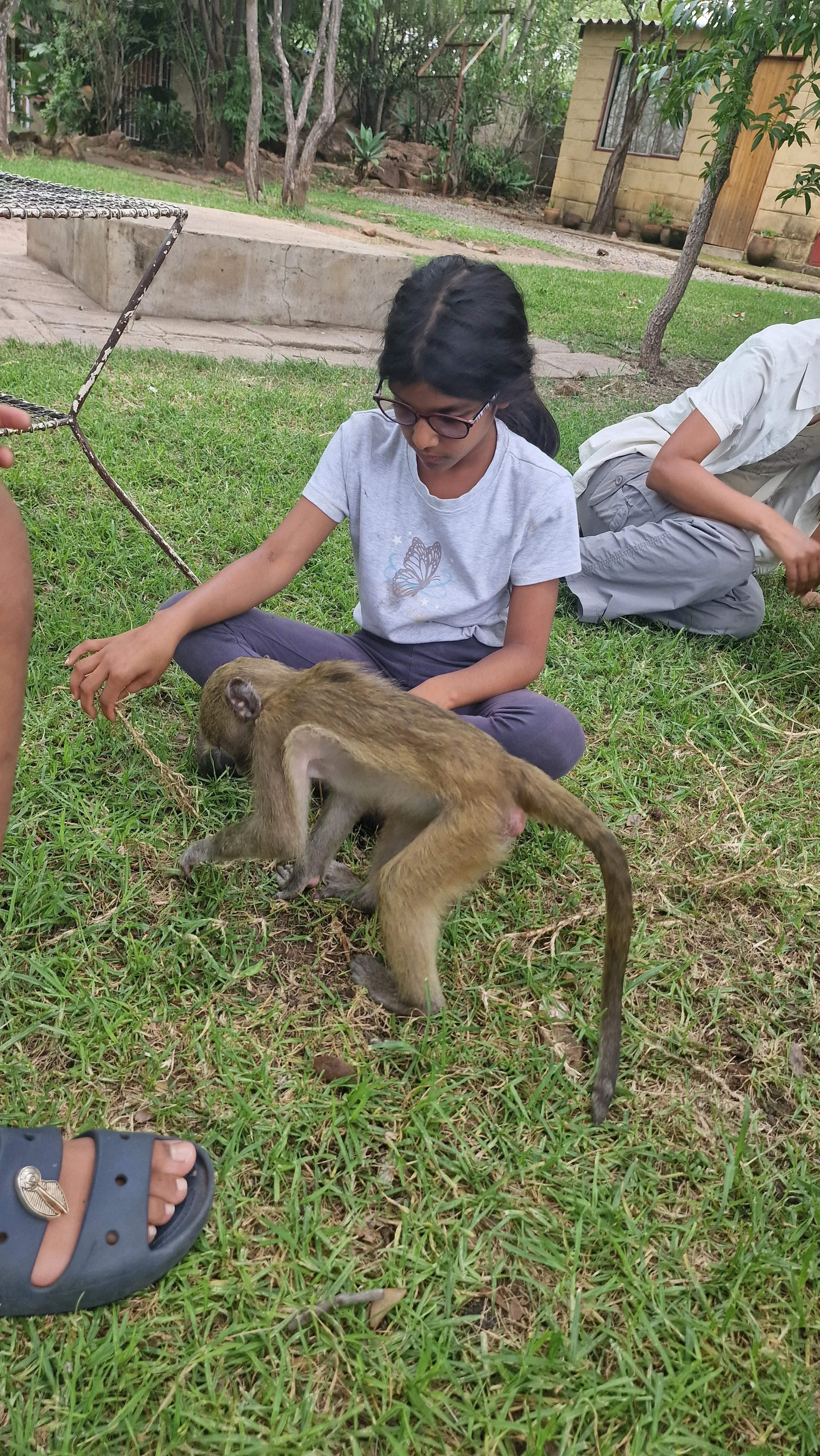
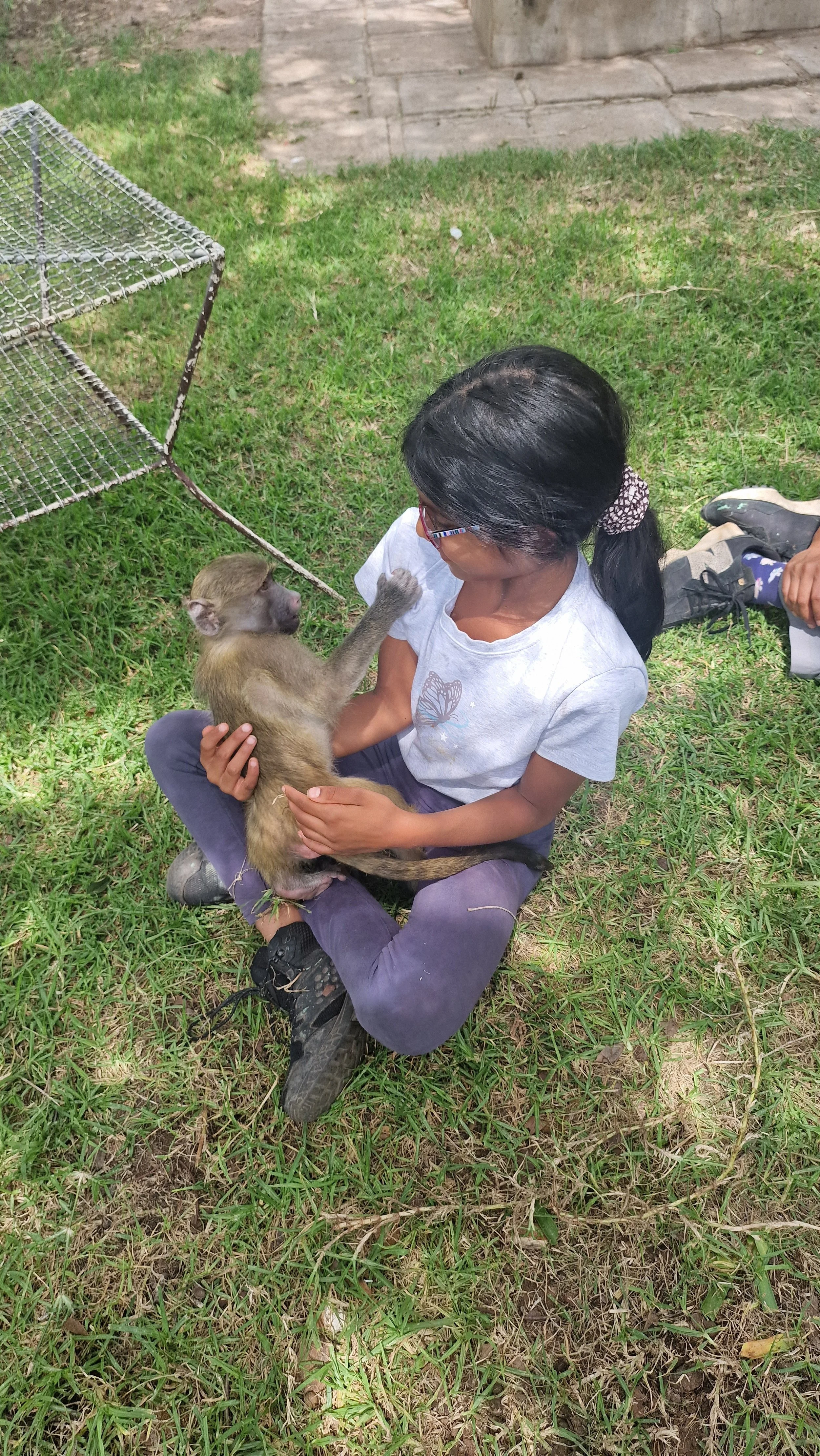
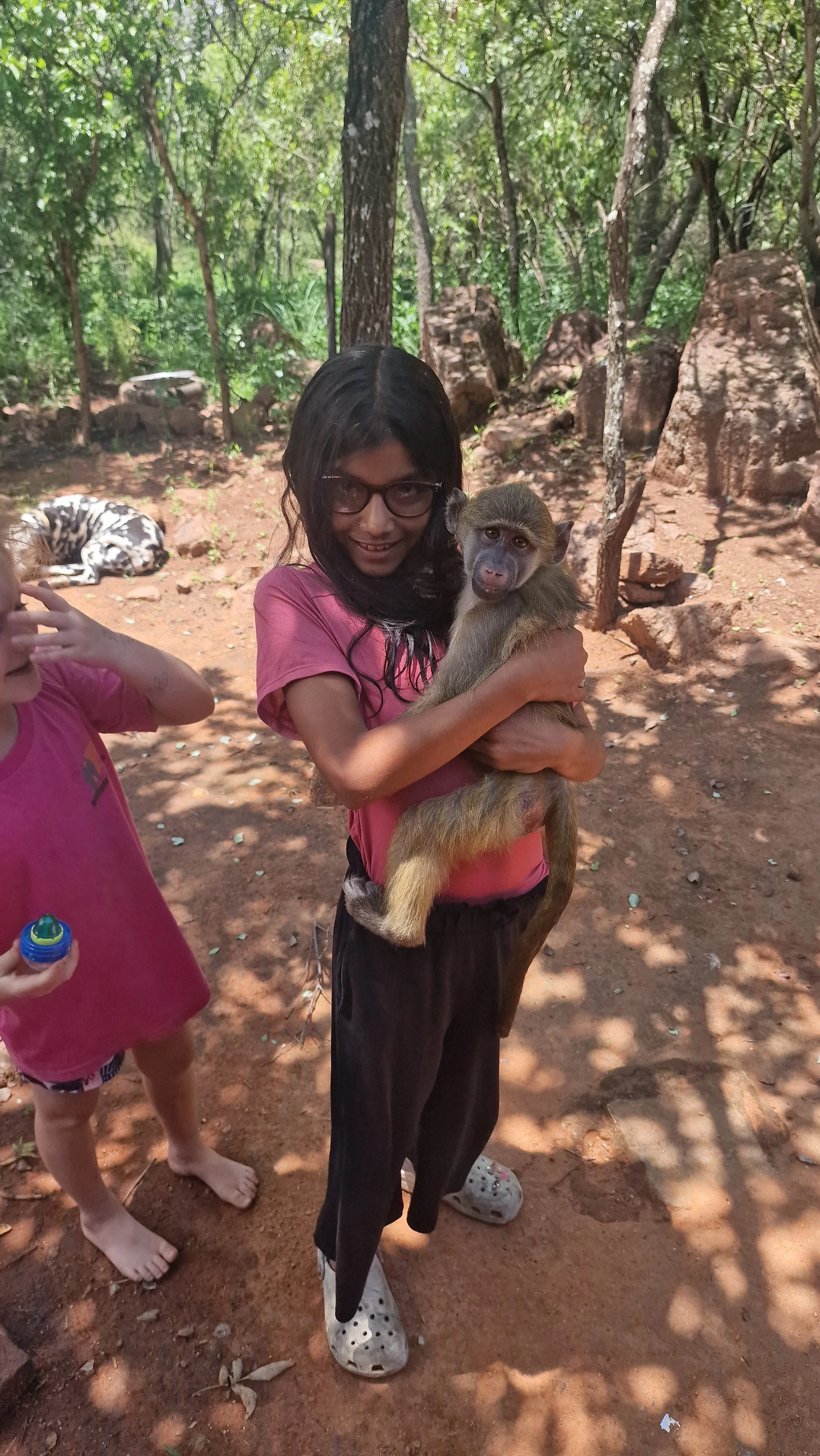
As seems to be the case with many front-line conservation volunteer projects, the living arrangements can be very basic – and I think for us FTBW was one of the most challenging we had stayed in so far in terms of the accommodation. Personally, I found it tough and a grind, and I let it impact my mood for the first few days. I was so proud of the girls who essentially told me to “get over it” because the purpose and mission of what we were doing was so clear and meaningful to them. They had fallen in love with the animals (including the two Dalmations that stayed with us) and the work we did. A good reminder of Nietzsche’s aphorism that “He who has any why to live for can bear almost any how”.
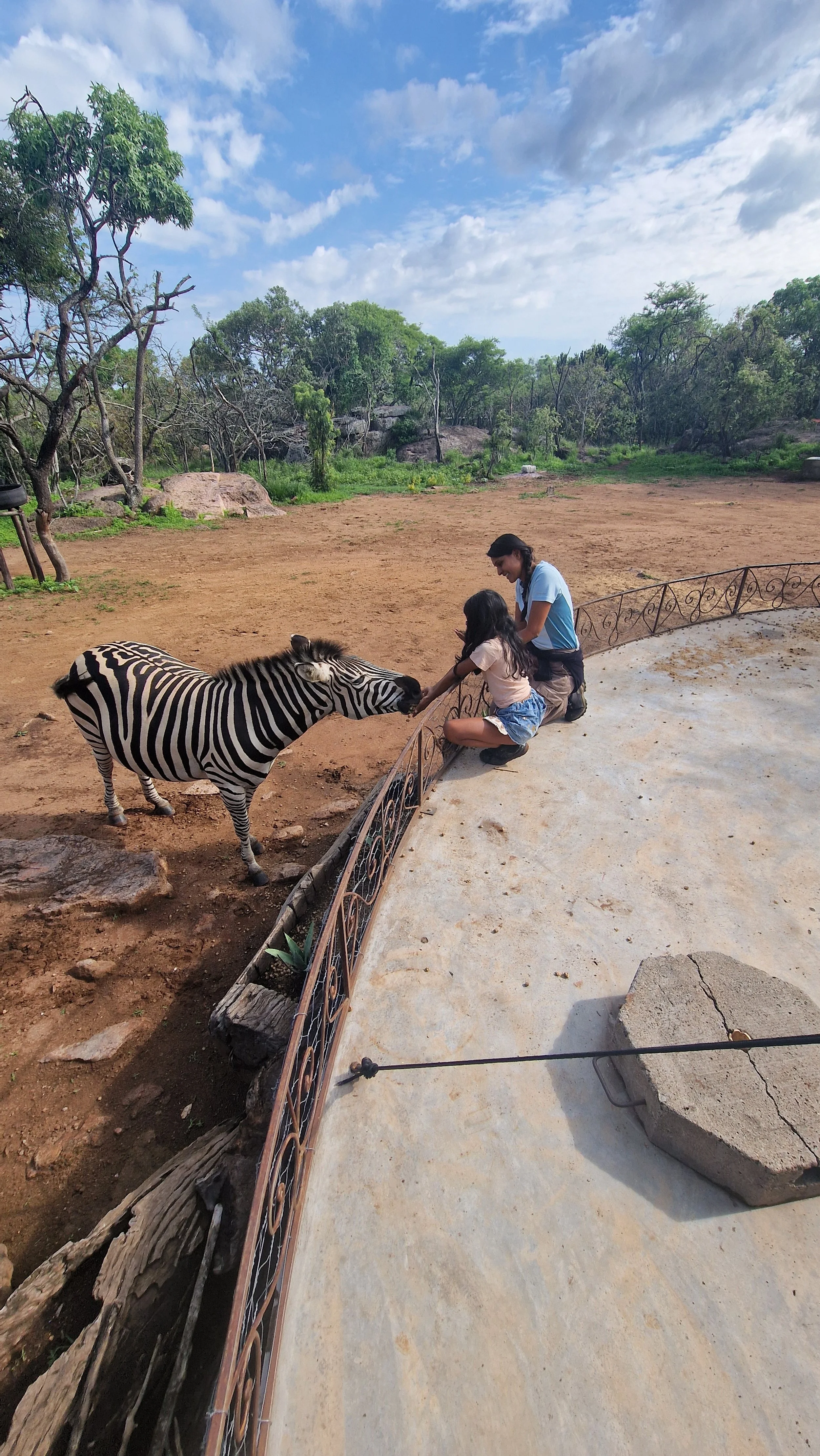
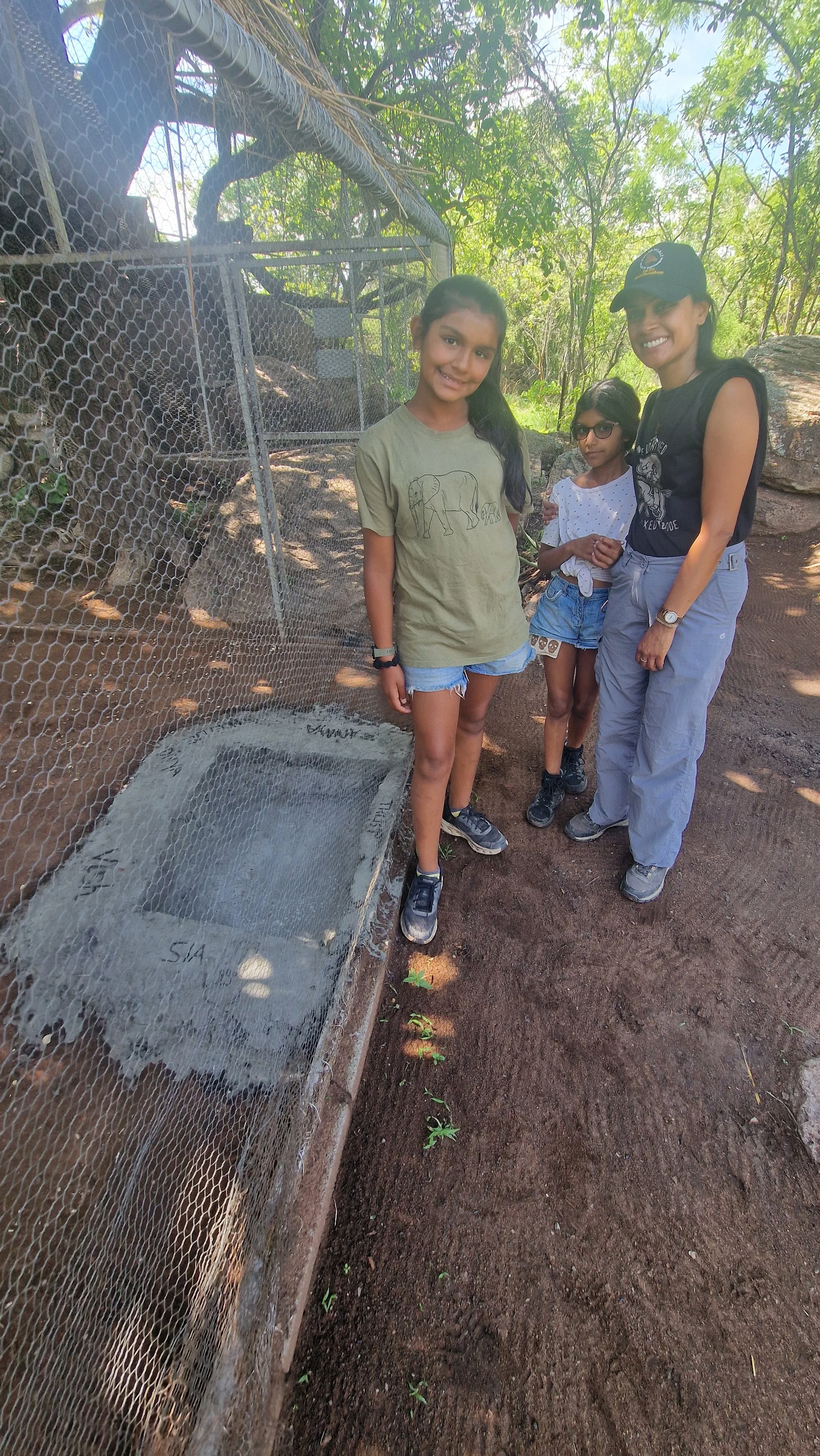
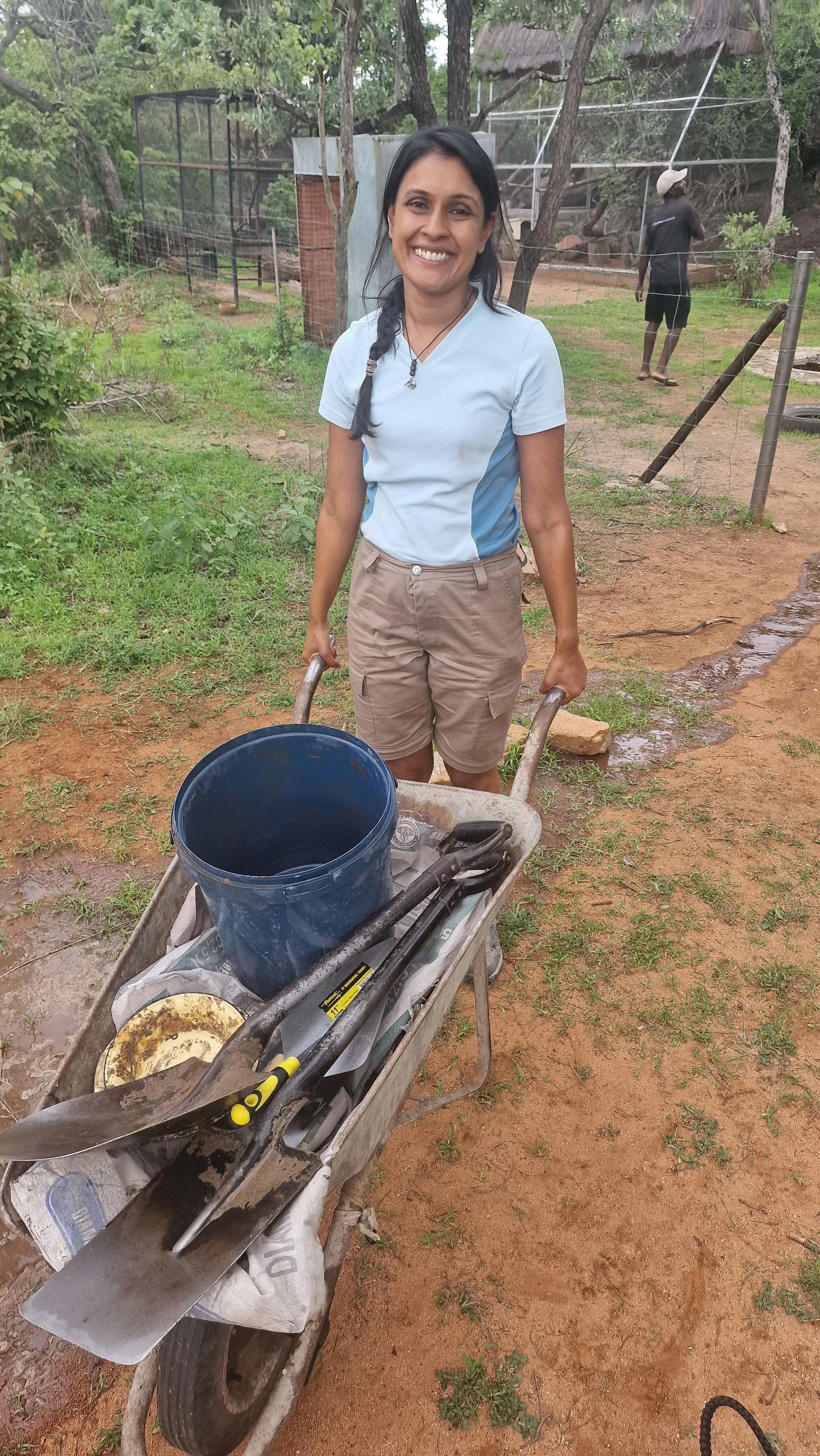
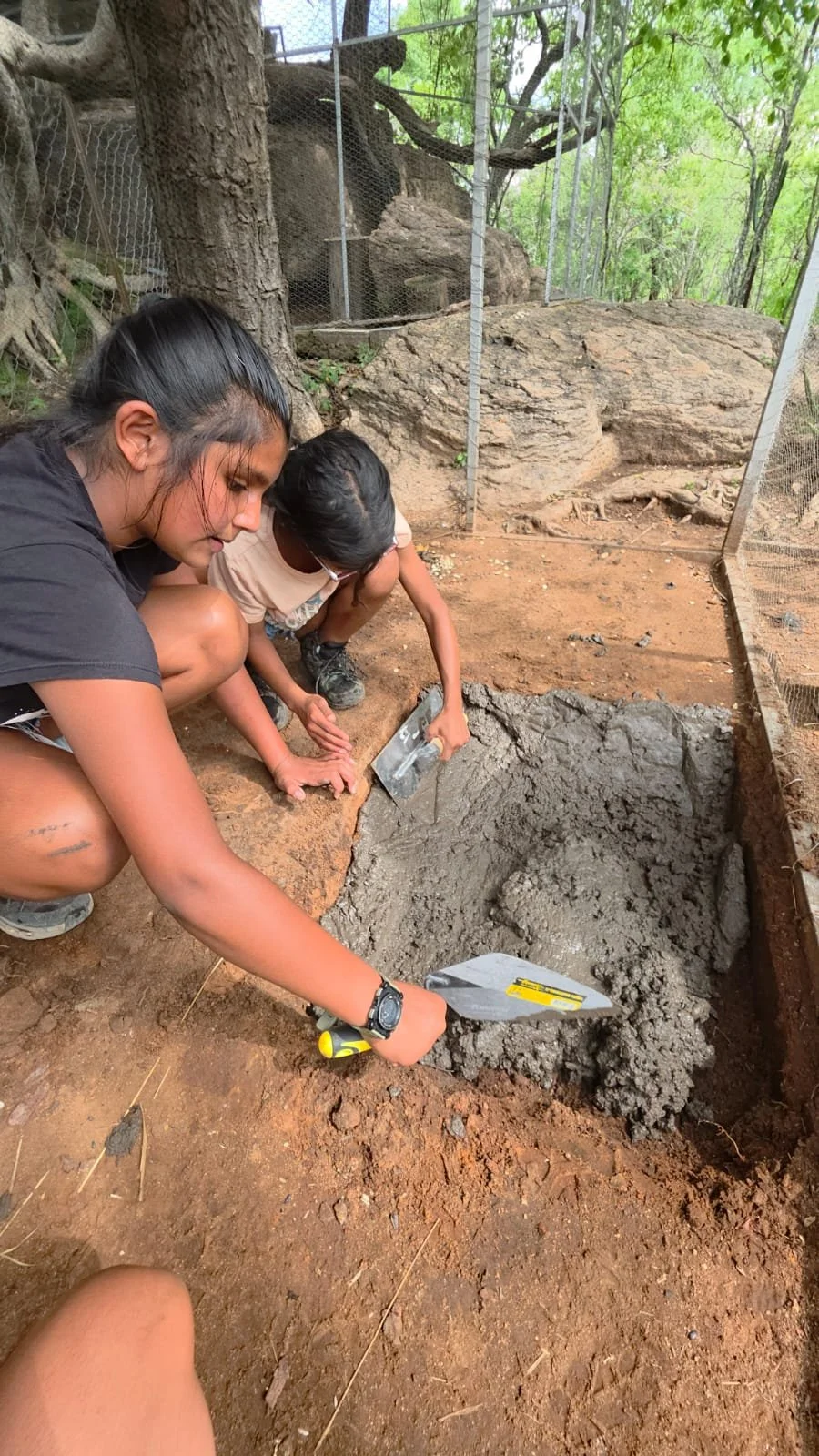
At FTBW I felt that the work we did was always intentional and impactful. For example, we assisted with many enrichment projects in our week – including building a rope bridge for the adolescent baboon cage, clearing old timber and recycling to make space for a new enclosure, and building a new water pool for the vervet monkey enclosure. This might sound obvious (surely all enrichment work should be meaningful?), but in our experience with other organisations this can feel a lot like “make-work” to keep volunteers busy. It was very rewarding for us to feel we made a small contribution during our short time with the sanctuary.
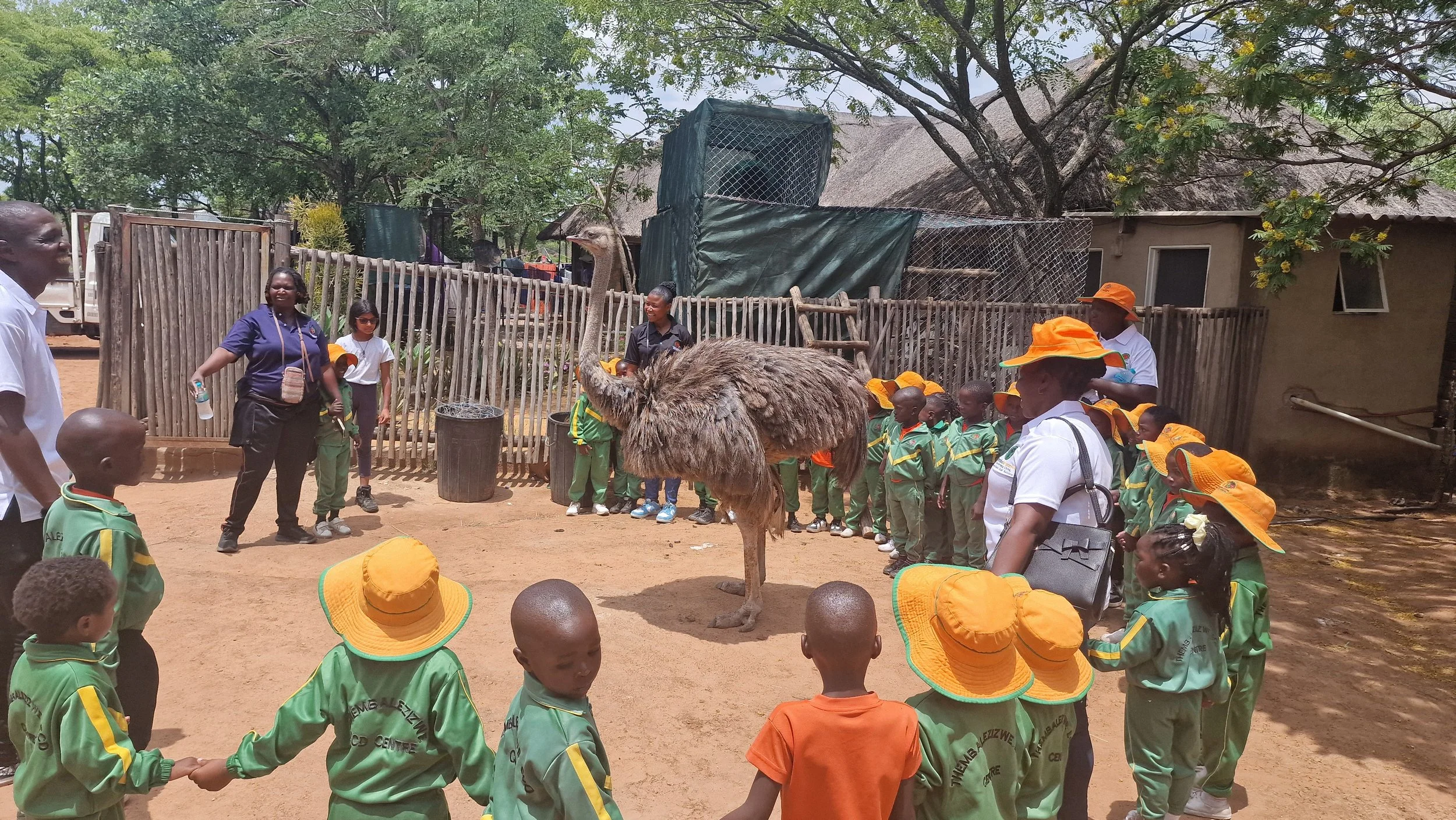
There are some strong community links – there were many school visits during our time there, and Baye and many of the staff members are clearly very involved in the community in different ways. It felt to me like there was untapped potential for more community engagement for FTBW.
What our day looked like
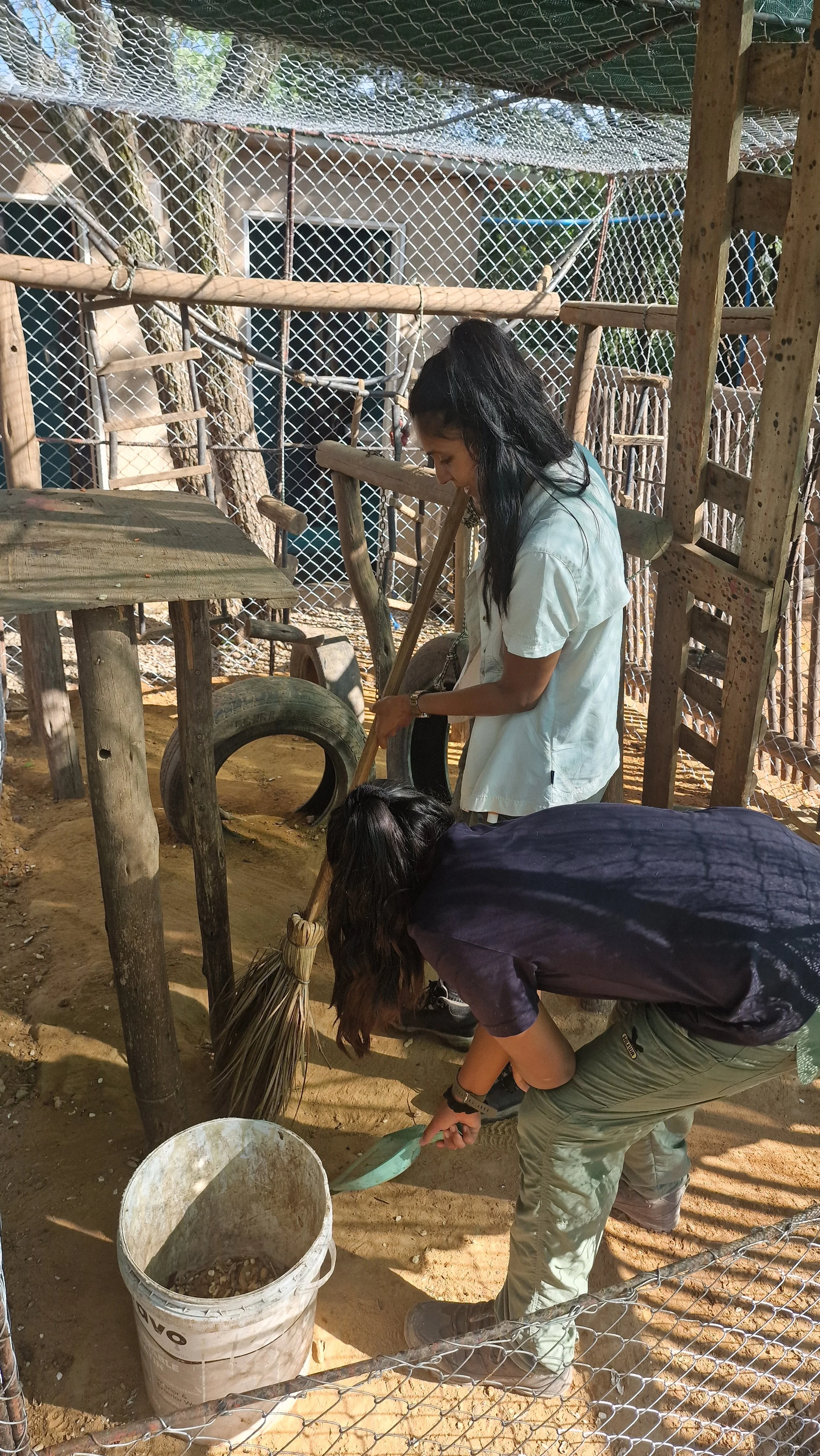
Each day was split into three sections. From 7:30-8:30am we would begin with feeding and caring for the roster of animals, and cleaning some of the enclosures.
The next two sections were from 9am-1pm and 2pm-5pm. These would alternate between baboon walks and enrichment activities. It was really special to spend so much time with the baboons, getting to know their different personalities and seeing how the dynamics shifted depending on their social hierarchy.
Who we met
Noellie – our main supervisor/co-ordinator during our time here. She is a former volunteer, and alternates between managing her salon in France and spending time working at FTBW. A very kind and gentle soul, who is clearly so devoted to this work.
Trust – our main guide/ranger whilst we were here. Fearless with the animals, who clearly respect him and listen to him (I’m pretty sure he was fully conversing with the large male giraffe). He is so calm and composed. He opened up about his story of upbringing and how he ended up at FTBW (or how Baye spotted him), which showed admirable determination and grit.
Chris – a board member (also former volunteer 5 years ago) who arrived in our last two days with FTBW. It was great to spend time with Chris, he is hyper curious and wants to turn over lots of stones to see what could make FTBW even better.
Baye – the founder and a force of nature. Baye is grounded, deeply compassionate and cares about her team. She is someone moved to act by a cause – whilst we were there she was committed to helping people she had met that were wrongfully imprisoned and was thinking of ways to raise money for legal aid to get them released.
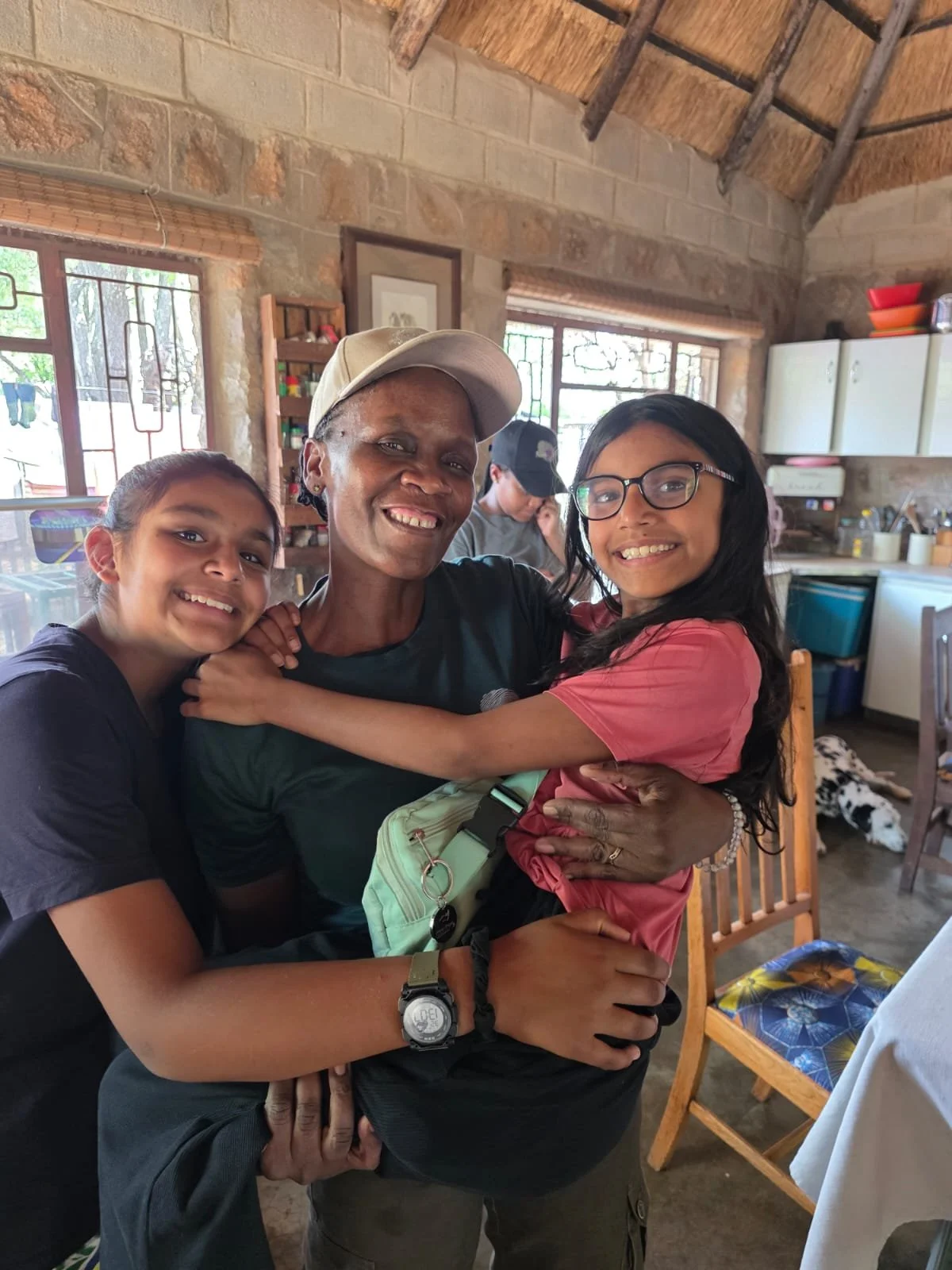
Nomsa - who managed the kitchen, accommodation and also seemed to handle school visits, the phone line, merchandise and many other jobs. She has such a warm and bright smile, and made us amazing food. She commutes over three hours each day in fairly tough conditions to manage the volunteer house and her house at home.
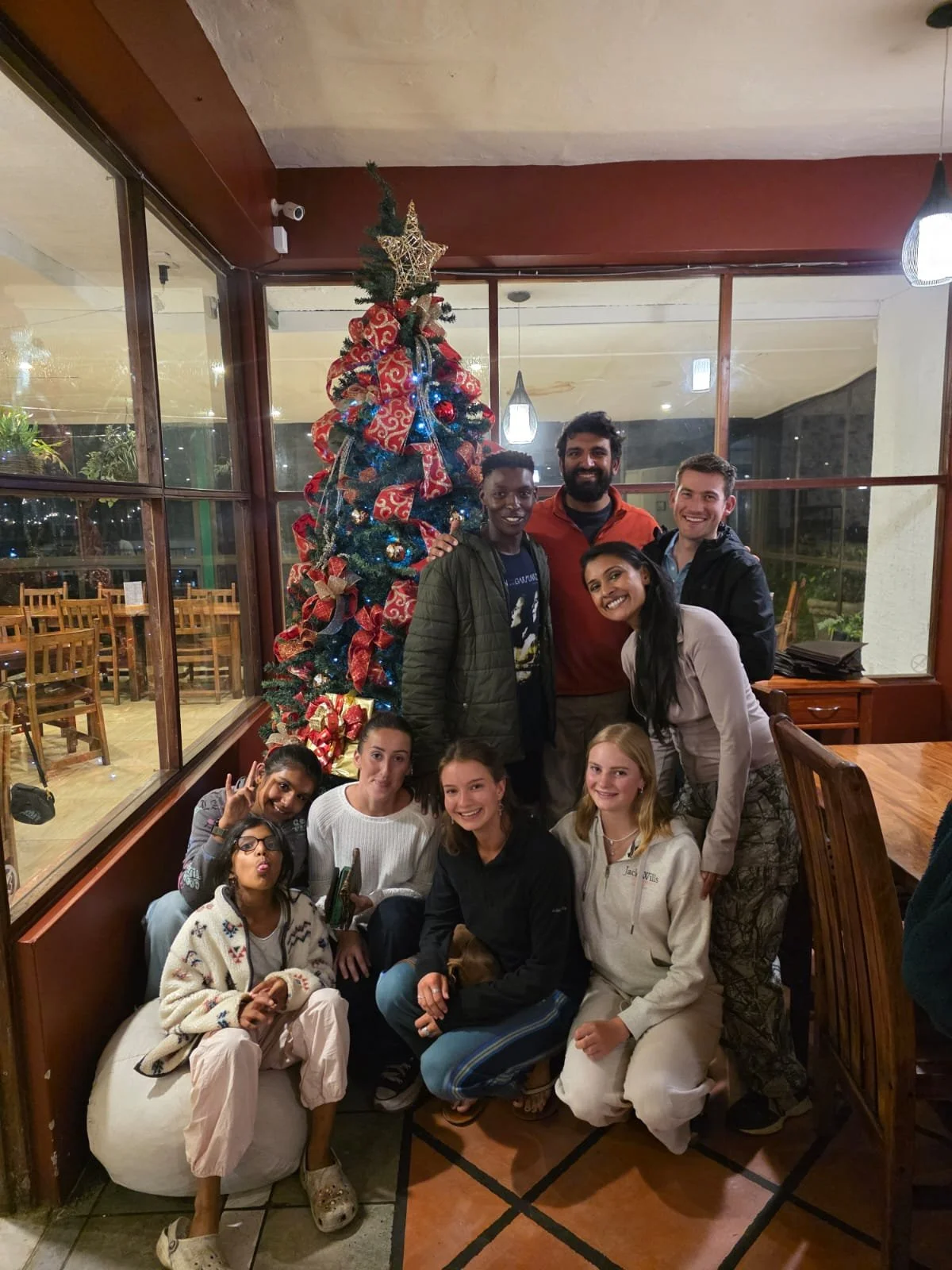
During our week we had some wonderful volunteers that helped show us the ropes. It was so great to get to know Emmanuela, Iris, Tara and Kelly. All really impressive people, I am so glad our paths crossed here and I am keen to see what they do in the future.